Laboratory Results

Explore the microbial analysis of our premium Worm Juice and understand how it improves soil, crops, and pasture.

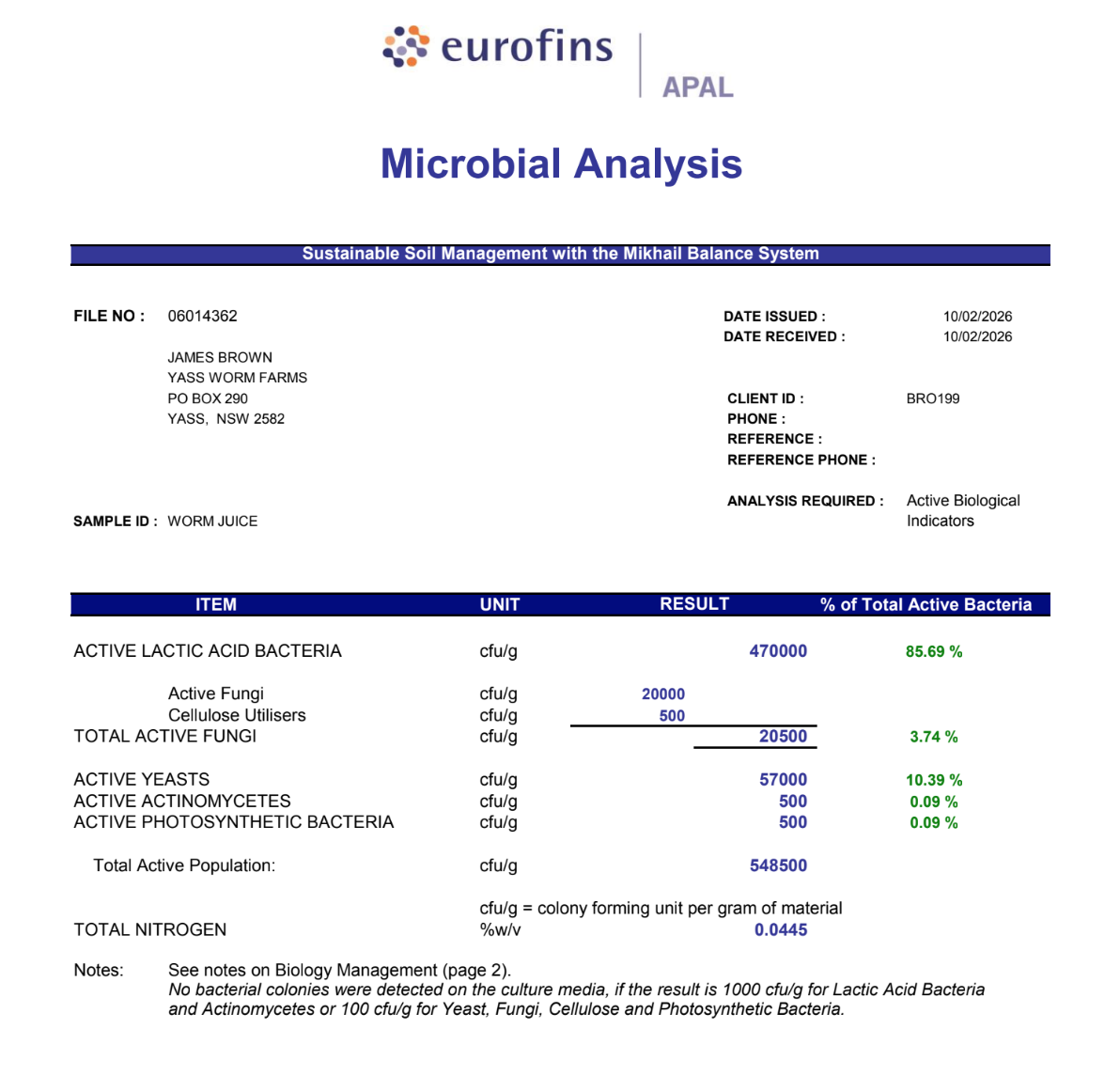
Lab Results 2025

Our Microbial Analysis (breakdown)

Active Fungi

25,000 cfu/g – Builds stable soil aggregates, improves structure & airflow, increases water retention.

Cellulose Utilisers

7,000 cfu/g – Breaks down plant residues and woody fibres, speeds up composting and carbon cycling.

Yeasts

10,000 cfu/g – Produces B vitamins, fuels microbial food web in the root zone.

Lactic Acid Bacteria

1,000 cfu/g – Suppresses pathogens and improves soil immunity.

Actinomycetes

2,000 cfu/g – Breaks down lignin to form humus, produces natural antibiotics.

Photosynthetic Bacteria

14,000 cfu/g – Fixes nitrogen from air, increases chlorophyll, and promotes greener pastures.

Application Rates for Our Products

On Pasture

  • Foliar spray Worm Juice 5-15 L/Ha during growth periods. Apply best when plants are damp or dewy.
  • @ 5L/Ha: $10 per hectare
  • @ 15L/Ha: $30 per hectare

On Crops

  • Inoculate seed: 5 liters per ton.
  • Liquid inject systems: 5-15 L/Ha.
  • Apply Worm Juice at 5-15 L/Ha when plants reach the 3-leaf stage.
  • Topdressing: 5-15 L/Ha when required.

Home Garden Use

  • 5-15 Liters per hectare.
  • 50/50 dilution for trees, flowers, plants, and vegetables.
  • 30% Juice / 70% water for delicate plants.

Lawn

  • 50/50 dilution: 5-15 L/Ha.

Horticulture / Viticulture / Orchard

  • Apply Worm Juice at 5-15 L/Ha, 3 to 4 times a year until harvest (best when plants are damp or dewy).

Advice from Anthony – Dairy Farmer (East Gippsland)

Andrew, a dairy farmer friend from East Gippsland, replaced all synthetic fertilisers with worm juice. He now saves around $50,000 annually and boasts the most outstanding pasture in the district. I asked Andrew what to look for after spraying a lucerne crop with worm juice, and here’s what he said:

“What to look for in a couple of weeks: plants should show signs of improved health and slightly darker leaves. The roots will be longer, and plants don’t seem to get attacked by red-legged earth mite or lucerne flea. Hot or cold weather fluctuations have less impact, and plants appear better able to handle water efficiently. On lucerne, you should notice a difference when harvesting — mowing will be denser, and bales will be more solid even if the crop looks normal. I recommend another spray four weeks after the first.”

Hope that helps,
- Anthony

Important Note About Town Water

If diluting with town water (which normally contains chlorine that can kill valuable microbes), please leave the water standing for 24 hours before mixing.

Use immediately after mixing—do not store. Keep in a cool place and make sure the container is vented to allow exchange of air.